What do concrete poems and haiku have in common? (The answer is, yes, the use of space and tension.)
this
rucked
up
sleeve
reveals
skin
Let’s have a look at two concrete poems. This one mimicks the creases of the sleeve, showing a ‘revealing’ gap. It’s a gap one could fall into. A ‘reveal’ can be scary, can’t it?
- A concrete poem can use images very literally on the page by using words and letters to show them.
- By shaping and positioning you take advantage of creating an emotional response in the observer/reader.
- Images are used in words and shape to enhance the effect. There is always a combination of word/s and image/s happening, visually and in abstract mentioning.
- There is ma that the reader can enter in and fill in their mind.
- A concrete poem may not have a kigo, a seasonal frame per se, still, here you could interpret it as early autumn or early spring, the time when a long sleeve is needed, and yet it can be too warm. We’re in a seasonal fluctuation. What does it reveal?
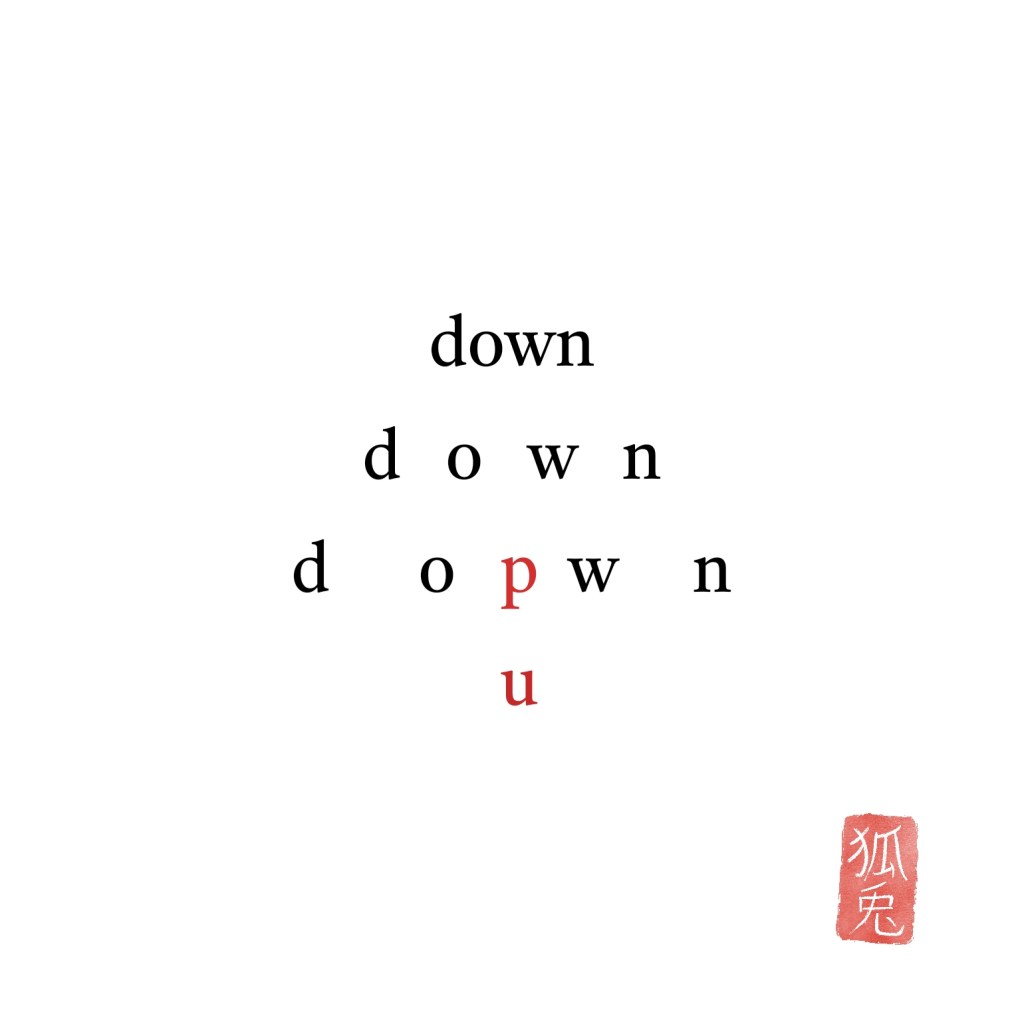
The second one: while falling things seem to scatter which allows to move upwards in between, at some point moving up gets more and more difficult, right? (Do you see the arrow?) The concrete poem plays with the reality of living, how much effort we need to take to move upwards, it gets harder and harder, but we can’t help but try.
Recommendation: study concrete poetry, text art and found poetry to learn more about how artists use the origin, the space around and the shape of the text to create ma and tension.


 pi & anne
Leave a reply to Caleb Cheruiyot Cancel reply